Why TailorDraft Will Never Block You Based on a Score
An honest conversation about resume scoring, ATS myths, and why we built our system to guide you - not gatekeep you.
TailorDraft Team
January 11, 2026
We recently watched a video by Farah Sharghi, an ex-Google recruiter who screened over 100,000 resumes during her career. Her message was refreshingly honest: most of what the resume industry tells you about ATS systems and scoring is wrong.
You should watch the full video - it's 23 minutes that might change how you think about job applications. But here's the core message:
"The T in ATS stands for Tracking, not Terminator."
And this one hit hard:
"Those scores aren't based on anything real. No one on the hiring team will ever see that number."
The Uncomfortable Truth About Resume Scoring
Farah exposes something the resume industry doesn't want you to know: the "match scores" that tools like TailorDraft.com and many of its competitors show you are invented metrics. They sound scientific. They feel actionable. But they have no connection to how you'll actually be evaluated.
Here's what really happens when you apply for a job:
- Your resume goes into an ATS (a database)
- A recruiter searches or filters that database
- A human skims your resume in seconds
- That human decides whether to keep reading
That's it. No AI rejecting you. No algorithm scoring your "keyword density." Just a tired recruiter with 200 resumes and 10 minutes, deciding in seconds whether you're worth a closer look.
As Farah puts it:
"Your resume isn't being judged by a system, it's being skimmed by a human. And humans don't respond to scores. They respond to clarity."
Our Honest Admission
Here's where we need to be transparent with you: TailorDraft has a scoring system too.
When you upload your resume and a job posting, we analyze the match and give you a recommendation. We look at keyword alignment, skills matching, experience relevance, and potential red flags.
And honestly? Our scoring probably has some of the same limitations Farah describes:
- We're making educated guesses about what employers want
- We can't know the hiring manager's actual priorities
- We're optimizing for patterns that may not apply to every situation
- No algorithm can truly predict human decision-making
We're not going to pretend our system is perfect when an ex-Google recruiter just explained why no scoring system can be.
Why We'll Never Block You
This is why TailorDraft will never prevent you from applying based on a score.
(If you ever do find yourself blocked from proceeding, that's almost certainly a bug - and we'd be grateful if you reported it so we can fix it: contact [at] tailordraft [dot] com)
Some resume tools treat their scores as gospel - flash red warnings, tell you not to apply, make you feel like you need to hit some arbitrary number before you're "ready."
We don't do that. Here's why:
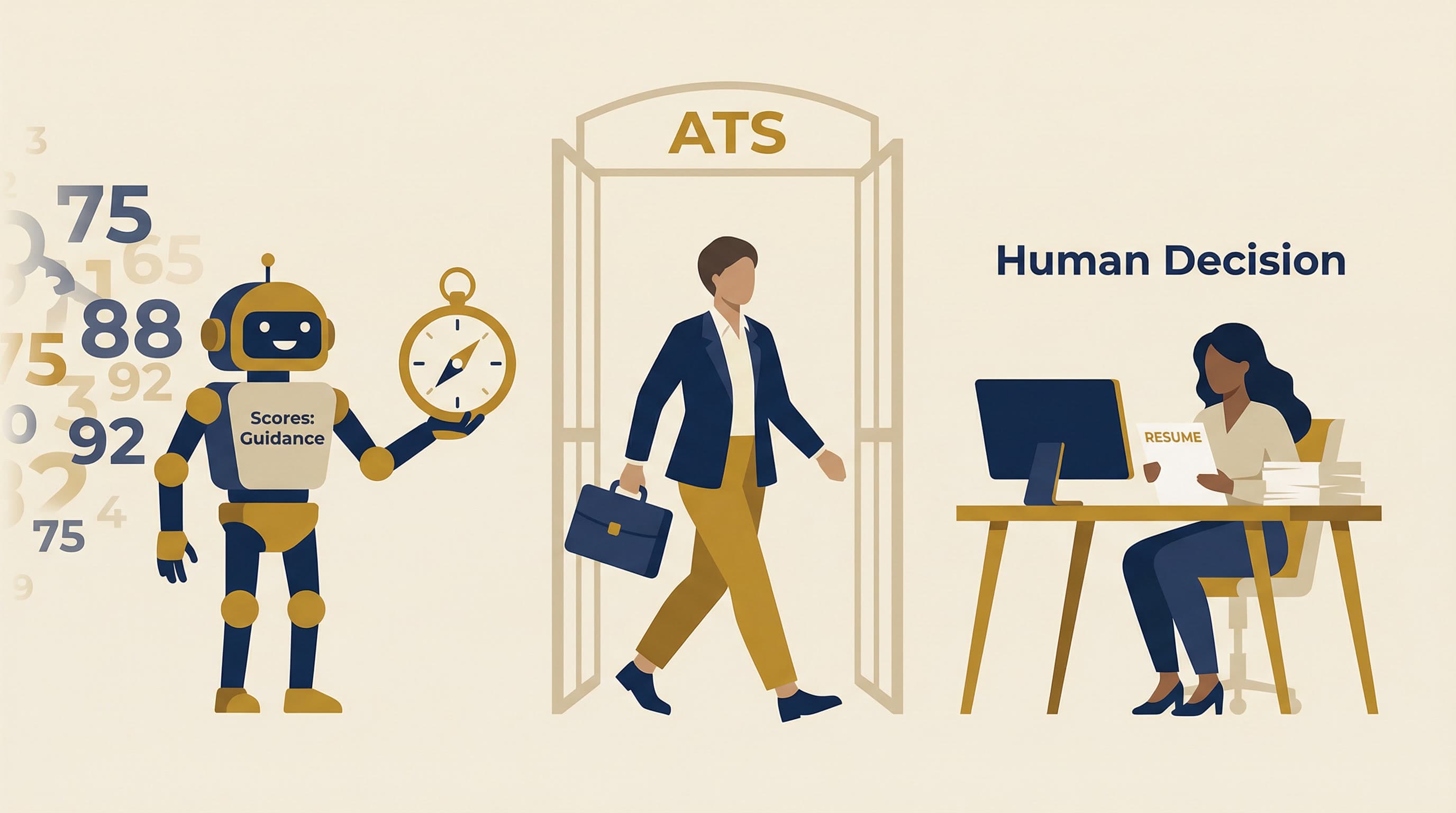
Scores are guidance, not gates
Our assessment tells you what we think. It highlights strengths and flags concerns. But you're the one who knows your situation, your experience, and your fit for the role. We provide information; you make decisions.
False negatives are worse than false positives
What if our score is wrong and you don't apply to your dream job? That's a terrible outcome. We'd rather give you imperfect guidance and let you decide than block you from an opportunity that might be perfect.
Human judgment can't be replaced
Farah said it best: "The algorithm is the recruiter." The final decision is always human. Our job is to help you communicate clearly with that human, not to simulate being one.
How to Use TailorDraft's Scoring (With a Grain of Salt)
Think of our assessments like a trusted friend reviewing your application - useful perspective, but not the final word.
Use the scores to:
- Identify obvious gaps or mismatches you might have missed
- Spot red flags in job postings (we flag scams, MLM schemes, unpaid work)
- Get a sanity check on your positioning
- Find opportunities to strengthen your narrative
Don't use the scores to:
- Decide whether you're "qualified enough" to apply
- Feel discouraged if the match isn't perfect
- Obsess over hitting a specific number
- Treat recommendations as requirements
The best advice from Farah's video applies here too:
"Instead of asking 'Did I get enough keywords?' start asking 'Does this make sense to a human if they're skimming it in 5 seconds?'"
What Actually Matters
According to Farah (and we agree):
- Write for readers, not systems - Is your value immediately clear?
- Show business impact - Not "managed weekly standups" but "reduced churn by 14%"
- Bridge the title gap - If your title doesn't match, add context
- Lead with results - Your best stuff should be visible in seconds
- Clarity over keywords - A confused recruiter moves on
TailorDraft can help you refine these things. But ultimately, your judgment about whether to apply matters more than any score we generate.
The Honest Conclusion
We built TailorDraft to help you, not to gatekeep you. Our scoring is a tool in your toolkit - useful for perspective, dangerous if treated as truth.
Use it like a compass, not a barrier. Let it guide your direction, but trust your own judgment about when to take the leap.
One more thing: The drafts we generate - whether resumes, cover letters, or other materials - are starting points, not finished products. We're here to speed up the process and bring helpful suggestions, but the final quality and output remain in your hands. Review what we generate. Edit it. Make it yours. You know your story better than any algorithm ever could.
Tip: Once you've polished a draft, consider re-uploading it to TailorDraft. The system will update your profile based on your improvements, and this compounds over time - each refined document helps the system understand you better, leading to stronger suggestions on future applications. Fair warning: actions on the platform consume credits, so weigh the cost. But for documents you're proud of, the investment in your profile often pays off down the road.
Because at the end of the day, the only person who can decide if you're right for a job is the human who interviews you. Our job is to help you get to that conversation faster - not to replace your judgment.
Go apply. Even if the score isn't perfect. Especially if your gut says it's worth a shot.
Want to see Farah's full breakdown of ATS myths? Watch the video here. It's worth your time.
Ready to tailor your applications with AI that doesn't gatekeep? TailorDraft provides guidance while keeping you in control. Start free with 50 credits.
Put This Into Practice
TailorDraft helps you create tailored resumes and cover letters for every application — grounded in your real experience.
Start Free50 free credits included. No subscription required.